 Manatan
Japanese Immersion for Beginners: A Practical Starting Plan
Start with one manageable video or passage, use help when you need it, and build a first week of Japanese practice you can return to.
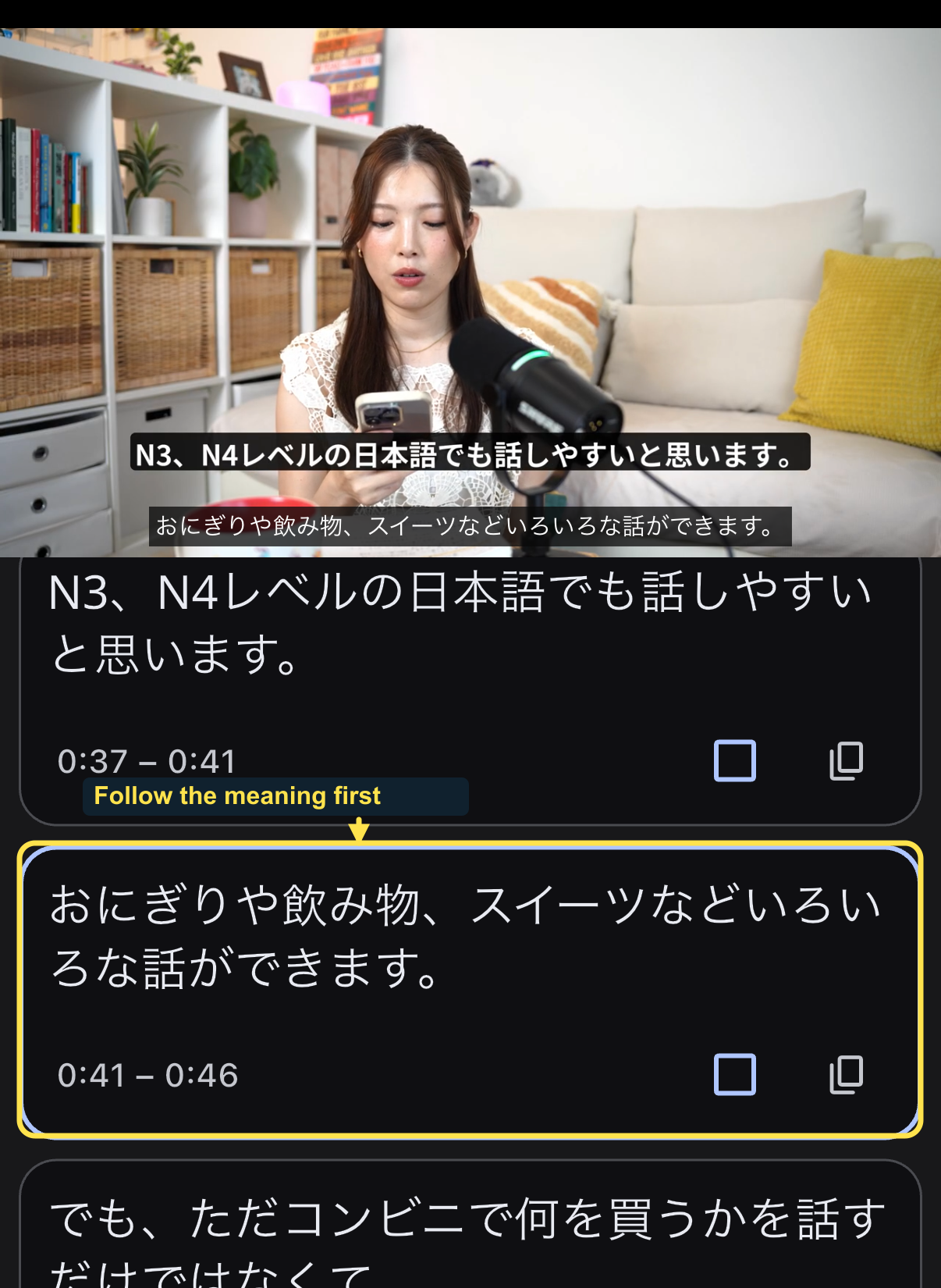
You want to learn Japanese through things you enjoy, but your first video sounds too fast and your first manga page is full of unfamiliar words. Where do you actually begin?
Start smaller than a whole episode or chapter. Choose a short passage you can partly follow, use help to understand something in it, and return to it tomorrow. You do not need to understand everything or turn every word into a flashcard.
This guide connects the individual Manatan walkthroughs into a starting path. The first-week plan below is a practical suggestion, not a promise of fluency or a schedule you must keep.
What immersion means here
Immersion means spending time understanding Japanese messages: listening to a conversation, following a scene, or reading a story. Having Japanese audio playing is different from trying to understand it. For this starter plan, choose something you can pay attention to.
If you are starting from zero, keep a beginner course alongside this practice. Work on hiragana, katakana, common phrases, and basic sentence patterns. The Japan Foundation's Irodori Starter has beginner lessons and audio, including character practice. You do not have to learn every kanji before trying a short passage, but immersion is not a reason to skip explanations you need.
1. Choose one manageable starting point
Pick a subject you care about and a small amount of it. A familiar situation, clear visuals, Japanese subtitles, or audio matched to text can give you something to work with.
For a first video session in Manatan, open More, then YouTube, and choose a catalog video with Japanese captions. The iPhone YouTube walkthrough covers sign-in, tracks, and playback controls.
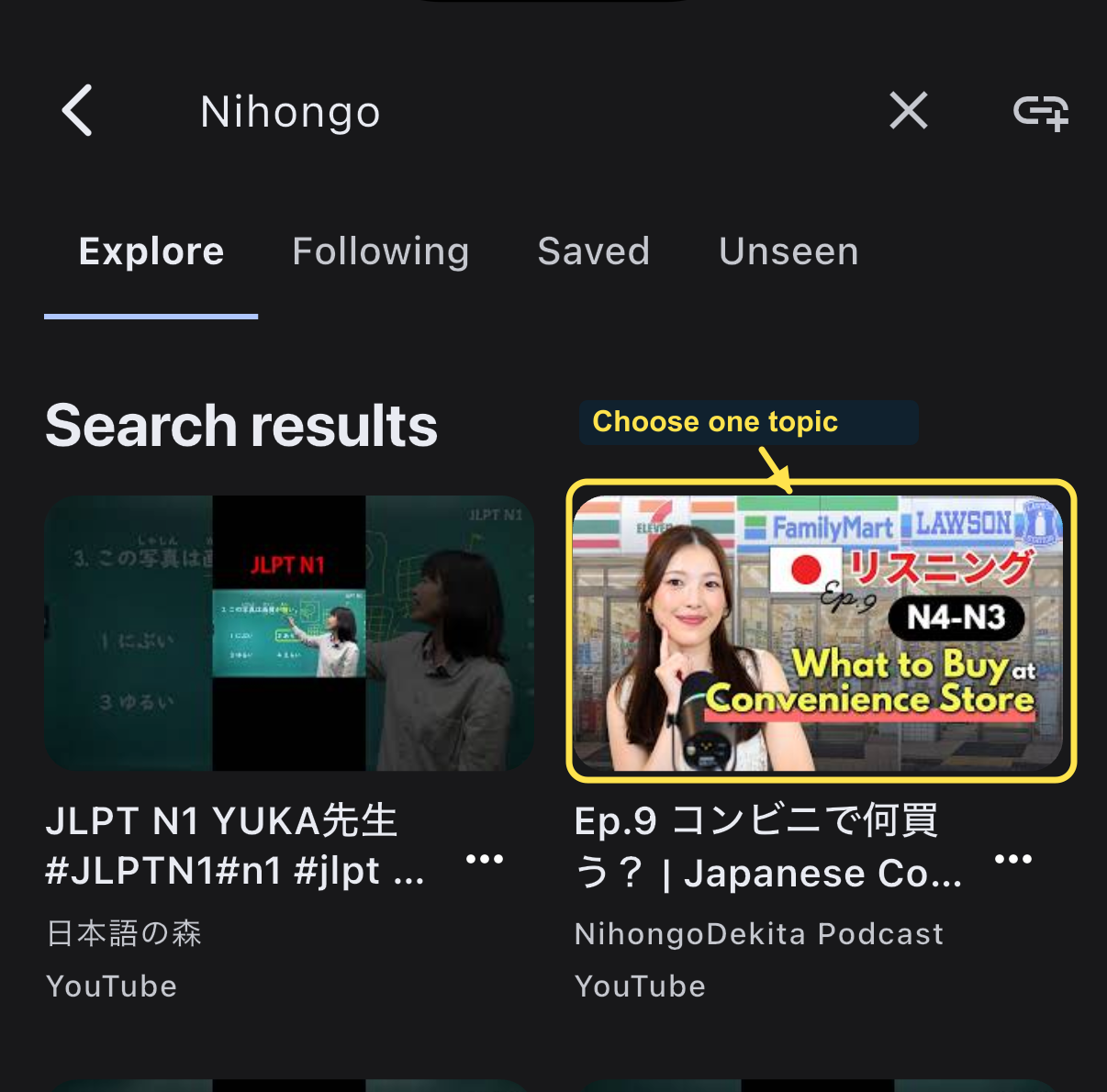
The convenience-store episode shown here is an example, not a recommendation for every beginner. If you cannot follow it even with help, try simpler learner material. A difficulty label is a clue, not proof that a video suits you. Our content discovery guide explains how to compare candidates.
Prefer reading? Choose one format first: manga with OCR lookup or an EPUB with a popup dictionary. Use material you own or are authorized to access.
2. Follow the situation before collecting words
Watch a short section or read a few lines. Ask who is there, what they want, and what is happening. Let an unknown word pass if you can still follow the point.
Keep Japanese subtitles on if they help. Translations can help you check the situation too, but reading an English translation is not the same task as following the Japanese. After checking, return to the Japanese line.
If you want a listening challenge later, try listening before revealing the subtitles. You do not need to start there.
3. Look up what helps you continue
Pause for a word that blocks the meaning or keeps appearing. With a compatible dictionary imported, tap the word in Manatan's interactive subtitle text below the video. Read the entry that fits the context, close it, and replay or reread the line.
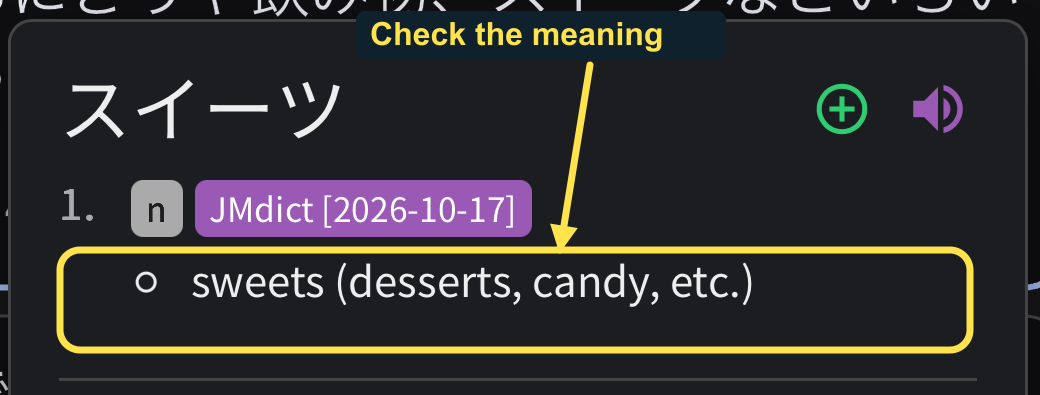
Here, スイーツ means sweets. You can connect it with the discussion of convenience-store food, then continue. You do not need to copy the whole dictionary entry.
Use the dictionary import guide if lookup is not set up. If each line still needs several lookups and a grammar explanation, choose a shorter or simpler passage. There is no prize for struggling through material that gives you nothing to follow.
4. Save selectively and leave room for reviews
Looking up a word and saving it are separate decisions. Save an example when you want to recognize it again and understand the surrounding meaning. Saving nothing is fine.
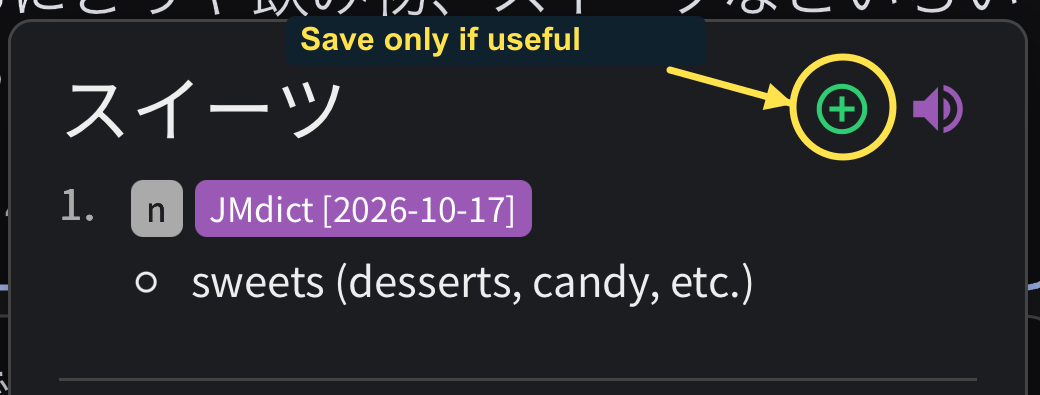
Before using the green plus, choose your flashcard provider and destination deck. Follow the Manatan SRS setup and review guide, or the AnkiConnect guide if you already use Anki. You do not need both systems.
Check existing reviews before adding another batch. New and Due are different counts; the screenshot shows a demonstration collection, not a daily target.
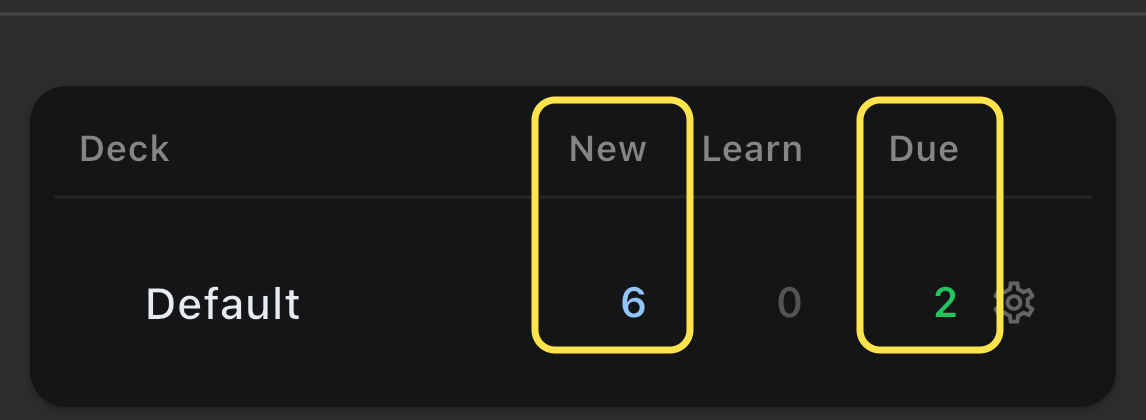
If reviews crowd out watching or reading, reduce new cards. Our sentence-mining guide gives more save-or-skip examples.
A flexible first week
- Day 1: Get ready. Finish your first Manatan setup, check one dictionary lookup, and choose one starting passage.
- Day 2: Follow a small section. Use subtitles or text support. Aim to understand the situation, not every detail.
- Day 3: Return to that section. Replay or reread it. Notice a phrase you recognize, then continue a little further.
- Day 4: Try saving an example. If a useful word appears, check the context and save it. Skip this step if nothing is worth keeping.
- Day 5: Try a review. Recall before revealing the answer. Then return to the story rather than spending the whole session arranging cards.
- Day 6: Adjust the difficulty. Continue if the material is manageable. If not, change the passage or use more support.
- Day 7: Choose what to repeat. Decide when you will return and what you will open. Keep the parts that helped and drop unnecessary steps.
Repeat a day when needed, and shorten the session on a busy day. This is a sequence to try, not a streak to protect. If a timed structure helps, use our 30-minute routine, or shorten its blocks.
After a week, ask whether you can explain something you watched or read, recognize a phrase you met before, and find a clear place to resume. You do not need a score to justify continuing. Build around something you want to understand, with enough help to keep going.